

Fed Odds, DeFi Yields, and Ethereum’s Glamsterdam Upgrade
State of the Network #385
Fed Odds, DeFi Yields, and Ethereum’s Glamsterdam Upgrade

Introduction
State of the Network #385
Key Takeaways
- Prediction markets currently anticipate an 84% probability the Fed will hold rates in their October meeting. Volume in Kalshi’s Fed decision markets grew 7.3x from April to September.
- Aave and Morpho lending pools exhibit similar borrow rates for the same asset. Between USDT, USDC, and WETH, USDC has the largest average difference in borrow rate across the two protocols by 91 bps.
- Ethereum’s upcoming Glamsterdam network upgrade includes enshrined Proposer-Builder separation and enforced Block Level Access Lists aiming to reduce centralization risks and introduce parallel execution respectively.
Introduction
With the Federal Reserve’s October decision two weeks out, prediction markets have swung from expecting a second hike to pricing a hold. This week, we look at how October’s expectations compare with prior meetings, the state of DeFi lending rates across Aave and Morpho, and what Ethereum’s upcoming Glamsterdam upgrade changes about block building and execution.
The October Interest Rate Decision
Following stickier than expected CPI inflation, the Fed raised rates in September by 25 bps, the first rate hike since July 2023. Should investors expect another rate hike in October? Since the recent release of cooler PCE and jobs data, both Kalshi and Polymarket prediction markets anticipate a high (84%) likelihood of the Fed maintaining the current interest rate.
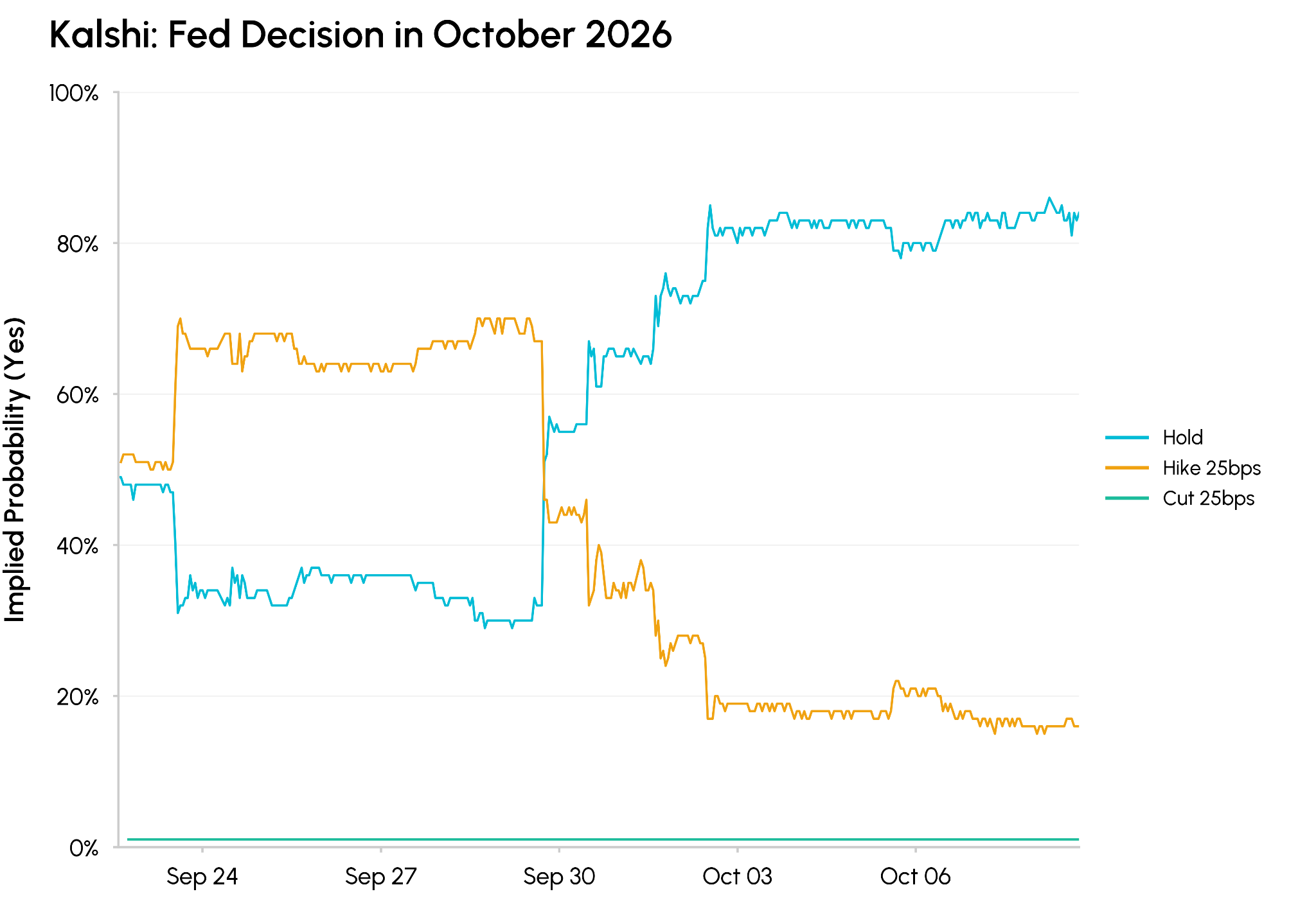
Prediction markets continue to play a growing role in pricing expectations on events and market outcomes. Kalshi and Polymarket have generated $167K and $113K in daily volume respectively from their “Fed Decision in October 2026” markets. Compared with past meetings, the October decision looks largely “priced in”. With September delivering the first rate hike in over three years, the outcome stayed close to a coin flip until the final week which attracted record volumes. Volume in Kalshi’s Fed decision markets grew 7.3x from April to September, with September reaching $78.4M in the 30 days before the decision.
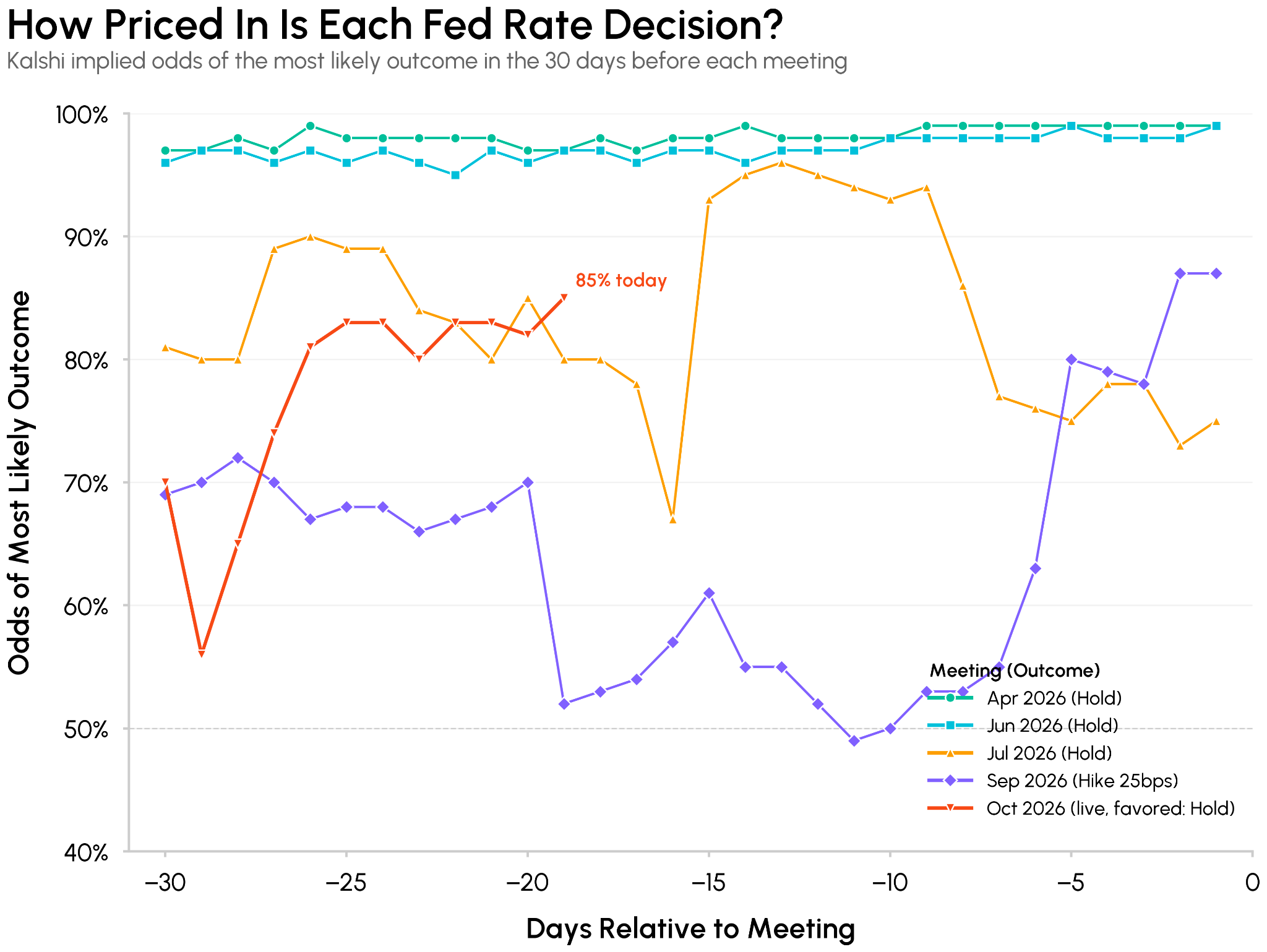
Source: Kalshi
With a hold largely priced in, the October meeting itself may be less of a volatility event for digital assets than September was. BTC has traded in a narrow range since late September despite the swing in hike odds. The hold may only be a pause as markets still see a hike in December, and long term Treasury yields near multi-decade highs remain a headwind for risk assets.
State of DeFi Yields
With the Fed funds rate at 3.75–4.00% after September’s hike, the benchmark return on dollars in traditional markets has risen. Stablecoin lending rates onchain are set by supply and demand in protocols like Aave and Morpho, raising the question of how the two compare.
Since the September rate hike announcement, $2.5B of USDT and USDC has flowed off exchanges to Ethereum. Stablecoins held on exchanges are often seen as dry powder for buying crypto, so these outflows may suggest investors are currently not positioning to buy digital assets heading into the Fed decision and that onchain protocols offer options to put that capital to work.
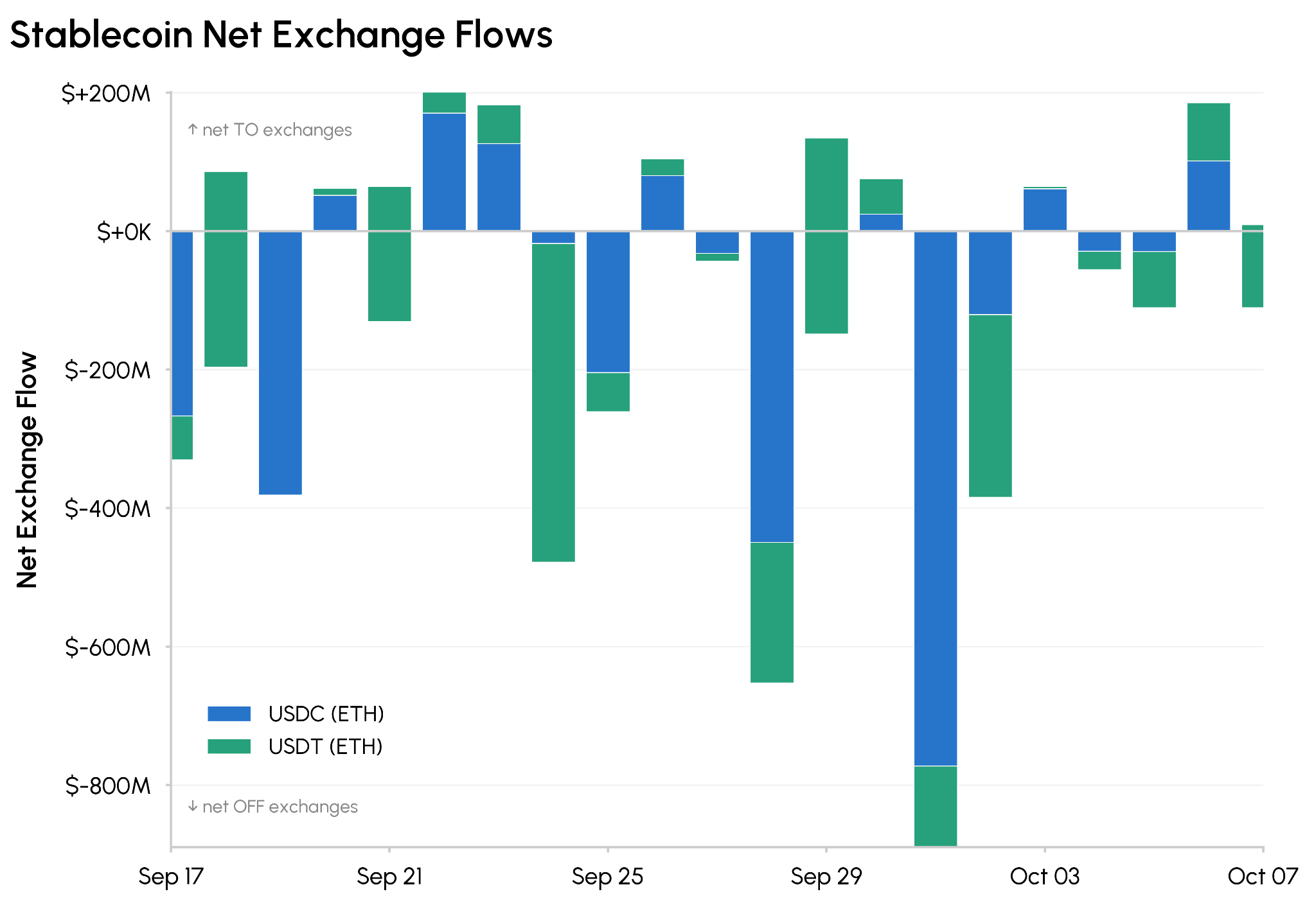
Source: Talos CM Network Data Pro
Borrowers searching for low rates can find opportunities across different lending protocols. Pools of USDC, USDT, and WETH carry similar borrowing costs across Morpho and Aave, but they are not identical. USDC shows the largest gap, costing 91 bps more on average to borrow on Morpho.
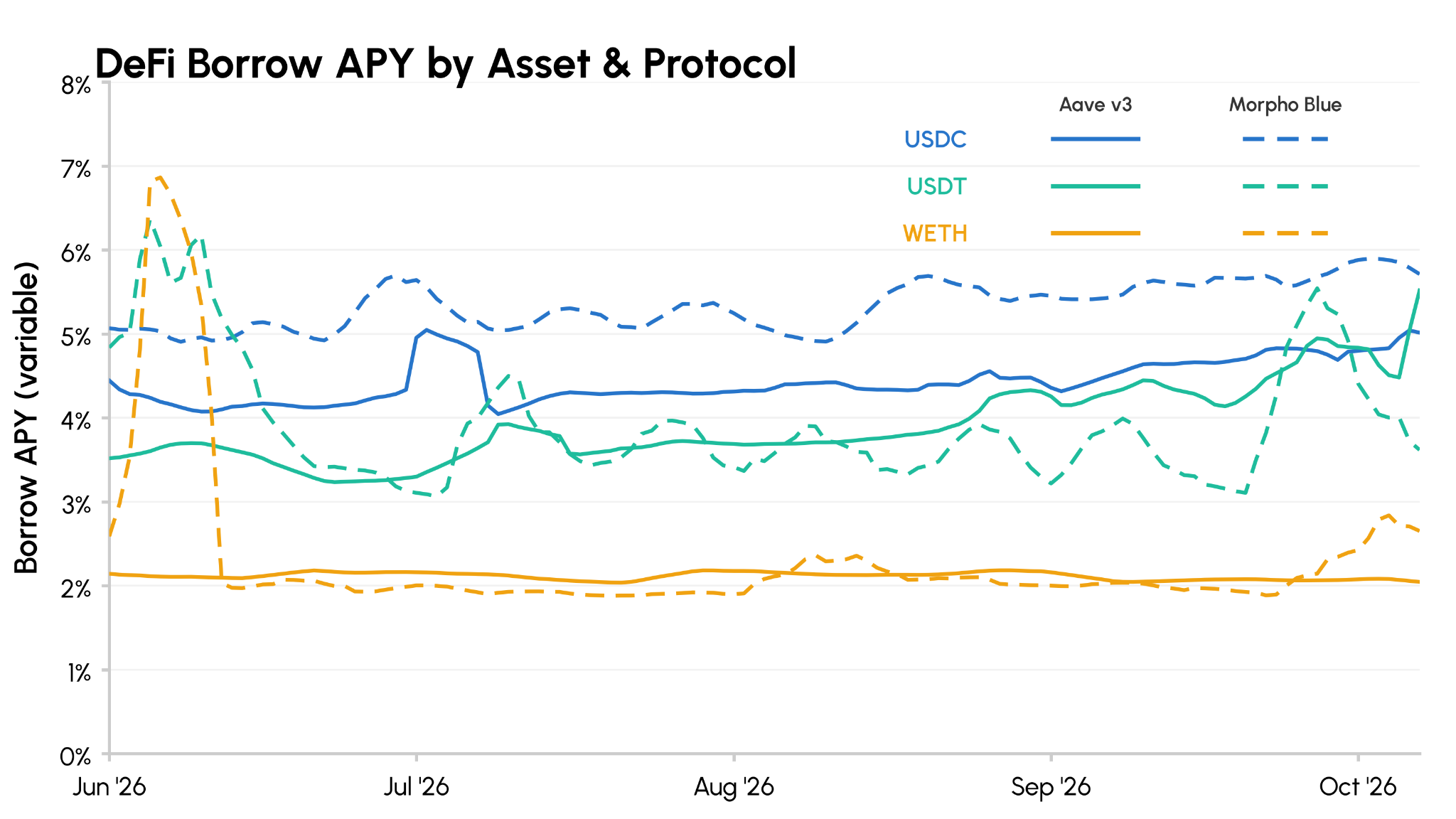
Source: Talos CM Protocol Metrics
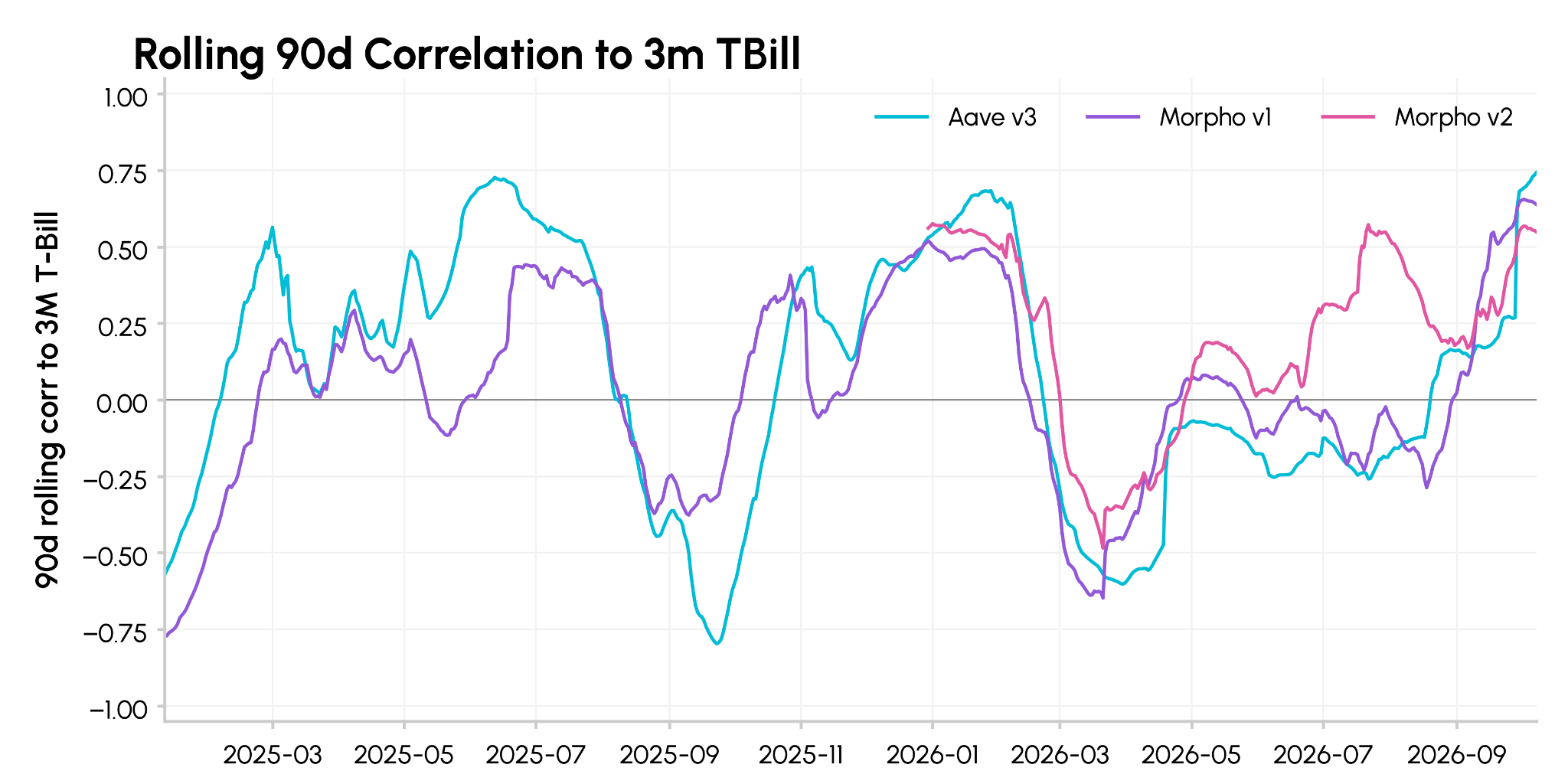
Do interest rate decisions impact onchain lending rates? DeFi lending rates have historically held no strong correlation with traditional fixed income rates. Recently, DeFi yields have a rolling 90d correlation greater than 0.5 with the 3 month treasury rate. However, DeFi rates are based on the total supply lent and borrowed in a lending pool or vault and do not necessarily move with treasury rates. 12 days after the Fed announcement on September 17 to raise interest rates by 25 bps, select DeFi rates only increased by at most 12 bps and the increase did not remain the norm.
Source: Talos CM Protocol Metrics
New developments such as Morpho’s Fixed Lending product, growing adoption of Aave v4’s Hub and Spoke model supporting custom lending rules, and the rise of tokenized money market funds and Treasuries expand optionality for lenders and borrowers, paving the way for DeFi yields that can be more aligned with traditional interest rates.
Ethereum Glamsterdam
Ethereum continues to upgrade the base layer that supports activity like DeFi lending. Ethereum’s “Gloas” and “Amsterdam” or “Glamsterdam” upgrade was released on the Sepolia testnet on October 6, 2026. Glamsterdam adjusts how transaction execution is managed and addresses the growing data needs of the network.
Enshrined Proposer-Builder Separation
One significant upgrade for Ethereum adjusts how blocks are proposed to validators. Today, block builders receive and order transactions based on priority fees and compute costs (or gas) to construct blocks. Using the MEV-Boost sidecar, builders send bids to validators based on the value of their block to be selected as the winning block. To prevent collusion, builders send bids through relayers to anonymize their bids. Relayers act as a neutral third-party facilitating block bids and sharing the winner’s block with validators. The largest block builder by market share, Titanbuilder, sends block bids to seven different relays.
To reduce centralization risk at the relayer point in the block-building process and reliance on third-party relayers who could act maliciously by sending fraudulent bids or claiming MEV rewards, Ethereum introduced EIP-7732 or Enshrined Proposer-Builder Separation (ePBS). ePBS replaces the core functionality of MEV-Boost and brings auctions onchain to the Ethereum consensus layer. Instead of depending on relayers to manage bids and payments between builders and validators, builders can place payment to validators in the subsequent block header on the consensus layer.
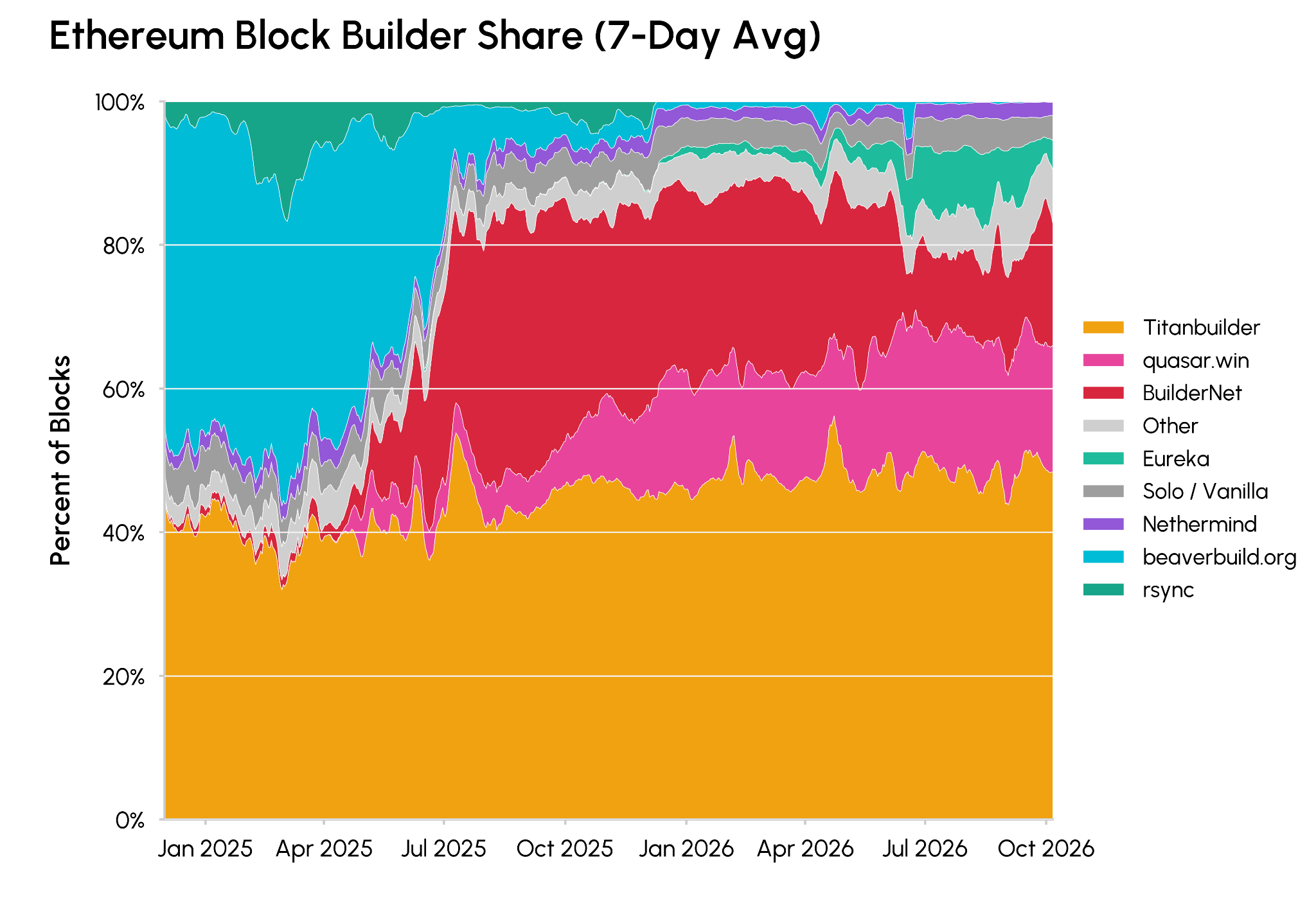
ePBS reduces one point of centralization risk, but Ethereum still has other points it can address in future upgrades. Block builders exhibit high centralization risk with three builders and their networks accounting for around 82% of all blocks produced on Ethereum.
Block Level Access Lists (from sequential to parallel execution)
To increase transaction throughput, networks have deployed parallel processing capabilities, enabling multiple transactions to execute simultaneously if their activity does not collide with one another. Ethereum currently executions transactions in sequential order instead of parallel.
EIP-7928 enforces Block Level Access Lists. Enforcing access lists requires transactions to know in advance which addresses and smart contracts transactions are interacting with. This unlocks the ability to execute transactions in parallel.
Source: Talos CM Network Data Pro
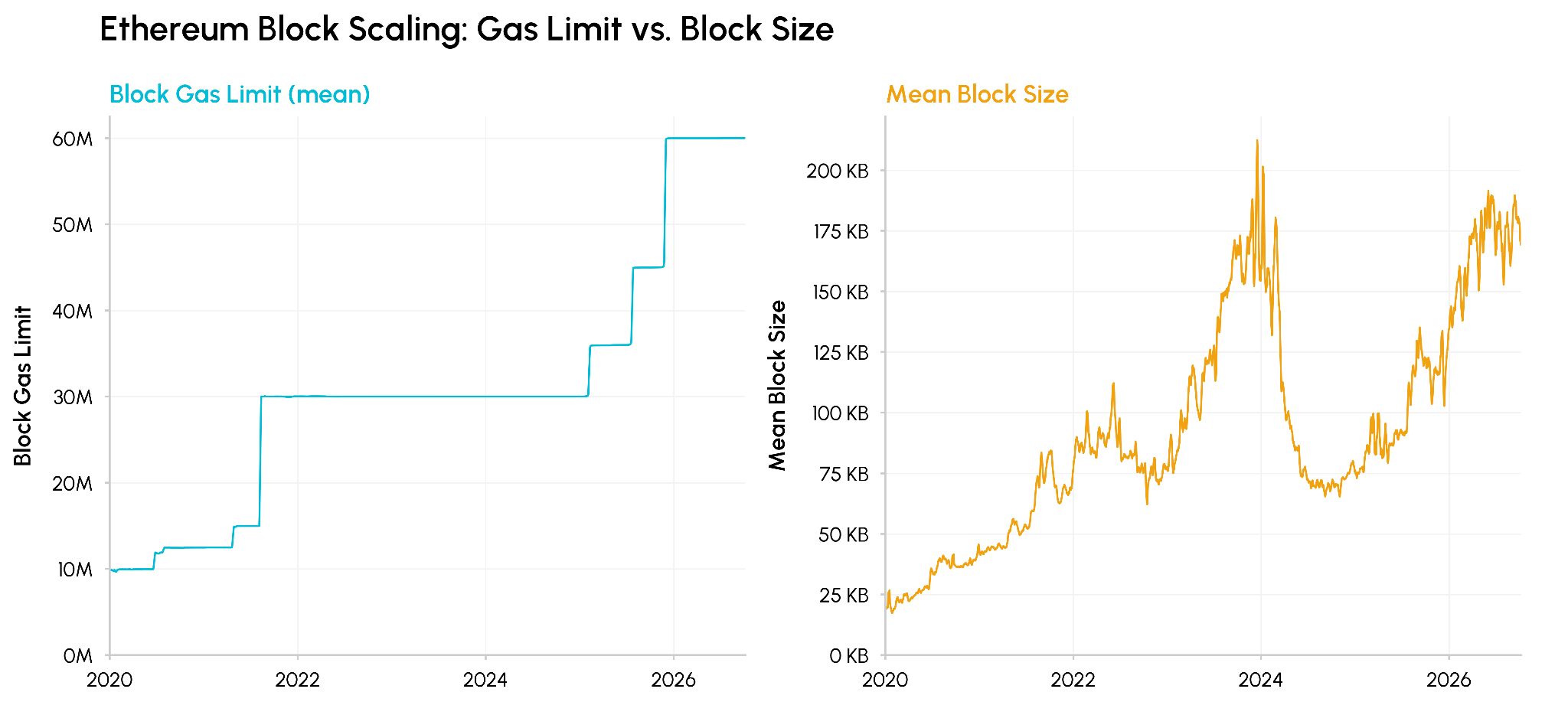
To support parallel execution and further scaling transaction throughput, Ethereum has increased the block gas limit on their testnet. With the Glamsterdam upgrade live on Sepolia testnet, the gas limit has increased from 60M units to 200M. This increases the total computational resources that can be consumed per block and enables even more transactions on the same computational size to be executed per block.
Disclaimer: The information herein is provided for informational purposes only. Talos Trading, LLC and its affiliates (“Talos”) does not give any representations or warranties in relation to the accuracy, validity, or completeness of the information of this material, including without limitation the factual information obtained from publicly available sources considered by Talos to be reliable at the time. Talos accepts no liability for any consequences of using the information contained in this material. Any opinions or estimates expressed herein reflect a judgment made by the author(s) as of the date of publication and are subject to change without notice. Neither this material nor any copy thereof may be taken, reproduced, or redistributed, directly or indirectly, without Talos’s prior written permission. Any views or opinions expressed are those of the authors and do not necessarily reflect the views of Talos. This communication does not constitute an offer to buy or sell, or a promotion or recommendation of, any digital asset, security, derivative, commodity, financial instrument, or product or trading strategy. This document and information are not intended to constitute investment advice or a recommendation to make (or refrain from making) any kind of investment decision and may not be relied on as such.
Subscribe
If you’d like to get State of the Network in your inbox, please subscribe below.
Latest insights and research
.jpg)


Request a demo
Find out how Talos can simplify the way you interact with the digital asset markets.