

Prediction markets for institutional trading
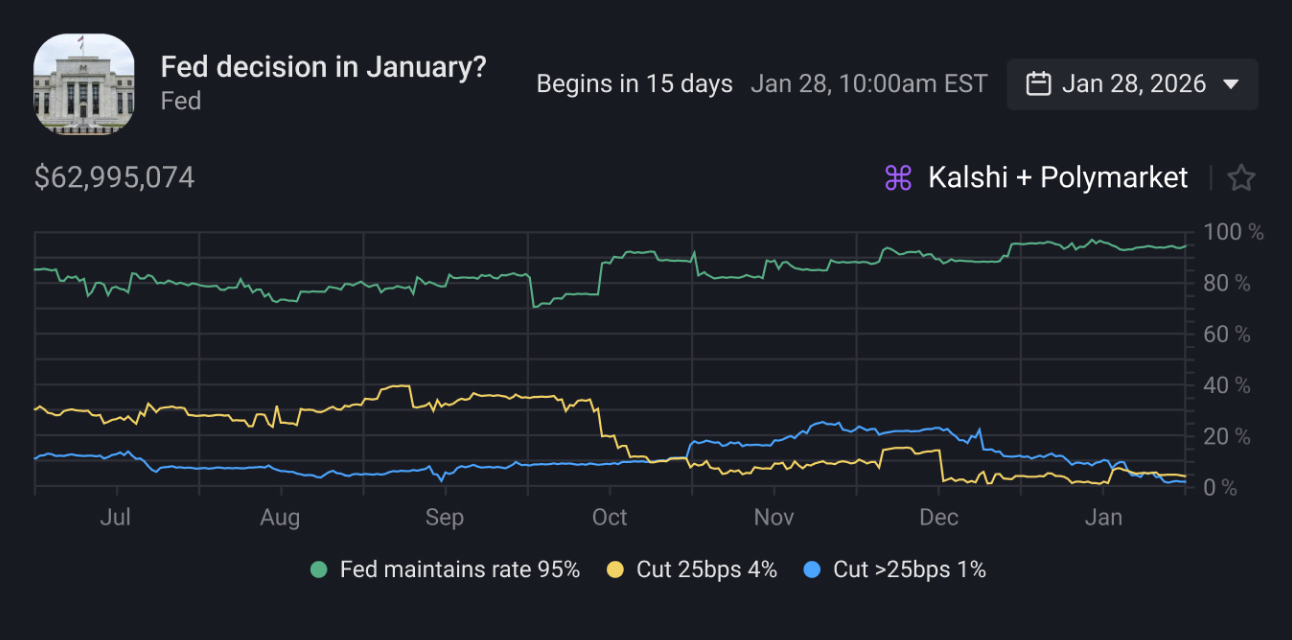
Prediction markets are venues where participants trade event contracts that settle on the outcome of a defined real-world event.
Institutions access event contracts on venues including Kalshi, a CFTC-regulated designated contract market, and Polymarket, a crypto-collateralized venue.
Talos provides execution, block negotiation and market data across prediction market venues, alongside crypto spot, tokenized real-world assets, perpetuals, futures and options.
Learn more
01
What are event contracts?
An event contract pays a fixed amount if a stated event occurs and nothing if it does not. For example, a contract quoted at 37 implies a 37% probability: a buyer pays $0.37 per contract and receives $1.00 on a favorable resolution. Maximum loss equals the amount paid.
The reference point is what separates these instruments from futures and options. A futures contract references a price level at a delivery date. An event contract references whether a specified condition is met, settled in cash against published resolution criteria.
Event contract
Future
Option
Underlying reference
Occurrence of a defined event
Price or index level
Price or index level
Payoff
Fixed: 100 or 0
Linear
Non-linear
Price expression
Implied probability, 0-100
Price
Premium
Maximum loss (long)
Amount paid
Unbounded
Premium
Settlement
Cash, against published resolution criteria
Cash or delivery
Cash or delivery
02
How do prediction markets work?
Trading typically runs through a central limit order book with the similar bid, ask and depth structure as other electronic markets, quoted in cents. Market makers provide two-sided liquidity; participants take it to express a view or hedge an exposure.
Every market has two sides. Buying YES and buying NO are opposite positions on the same contract, and the two prices sum to approximately 100 net of spread. A position can be exited at the prevailing price rather than held to resolution.
03
Where do institutions trade event contracts?
Two venues account for most institutional interest, and they are structurally different.
Kalshi operates as a designated contract market regulated by the CFTC, with dollar-collateralized contracts and an onshore access path that does not require an offshore entity.
Polymarket is crypto-collateralized, with outcome positions represented as on-chain tokens. Its breadth across political, macro and cultural events often make it a reference for probability data even at firms that do not trade it.
Collateral, outcome representation, resolution authority and settlement timing all differ, which means a firm trading or researching both maintains two representations of the same economic exposure.
04
Why do institutions trade event contracts?
Event contracts can allow an institutional desk to express a view on an outcome directly, without constructing a proxy from instruments that only correlate with it.
Direct macro expression.
Rate decisions, CPI and payrolls prints, and fiscal or regulatory outcomes, traded as the event rather than through duration or FX proxies.
Crypto-correlated event markets.
Short-horizon markets on digital asset price outcomes, including intraday BTC markets, traded against spot and perpetual positions on the same platform.
Event risk hedging.
Isolating and offsetting a discrete outcome risk in a portfolio, at a defined cost, without altering the underlying position.
Relative value.
Pricing differences between venues on equivalent outcomes, and between event contracts and correlated listed instruments on CME and elsewhere.
Institutions trading event contracts include:
Crypto-native funds and prop firms adding event-driven strategies.
Macro and multi-strategy funds for which event contracts are the primary interest, and
TradFi firms whose mandate permits. CFTC-regulated products but not offshore crypto derivatives.
05
What does institutional access to prediction markets require?
Event contract volume has been accessible mainly through exchange-native interfaces: the venue's own UI or API, a separate clearing relationship, and manual reconciliation into the book. Execution tooling and risk aggregation available across the rest of the book to date have not accounted for event contract positions.
One connection and one order management workflow, covering event contracts alongside existing positions, with a shared entitlements model
Execution algorithms that work orders into event contract books while limiting market impact, replacing manual order placement
A block RFQ path for size that cannot be shown on screen
Consolidated position and P&L across event and digital asset exposure
A single audit trail covering pre-trade controls, order lifecycle and allocation
Normalized market data across venues that model outcomes differently
Distribution infrastructure for brokers offering prediction markets to their own customers without building venue connectivity, quoting and settlement
How Talos supports prediction markets for institutions
Talos extends its execution, risk and connectivity infrastructure to prediction markets, so clients trade the outcomes of real-world events alongside spot, tokenized RWAs, perpetuals, futures and options in one workflow.
Trading through the Talos OEMS
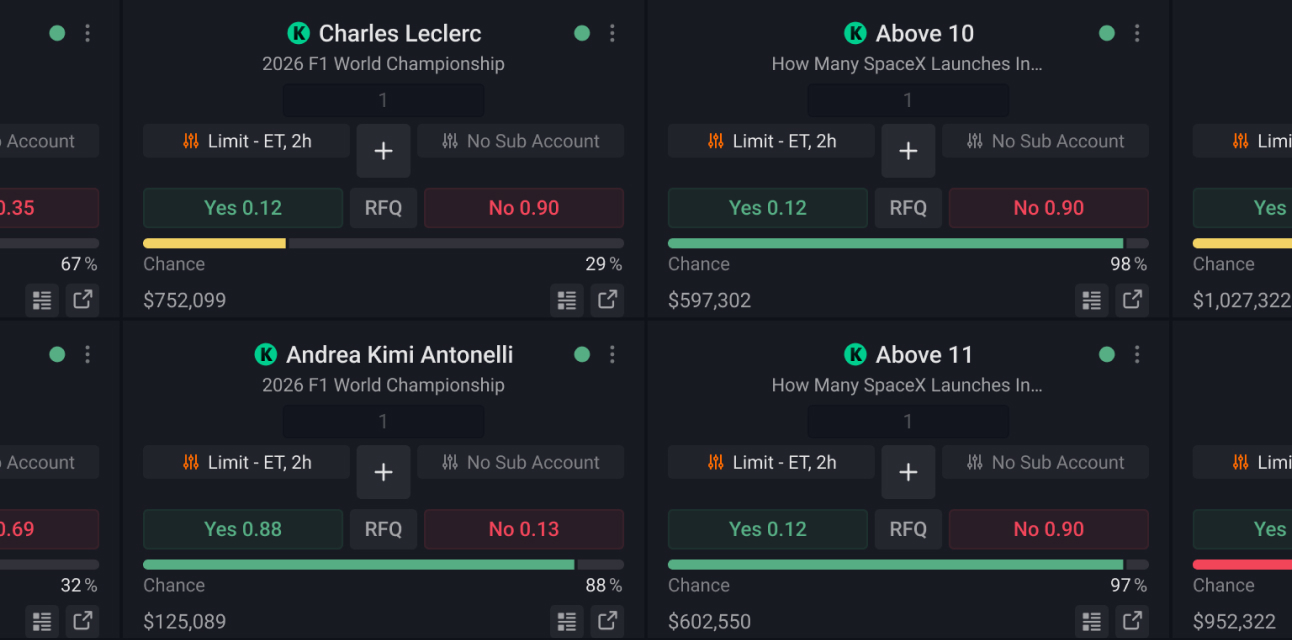
Event contracts route through the same OEMS, order tickets and entitlements model clients use for digital assets. Market makers and hedge funds work orders with the Talos algo suite – including Iceberg, Pegged, Sniper and TWAP – to build positions while limiting market impact.
Block trading via RFQ
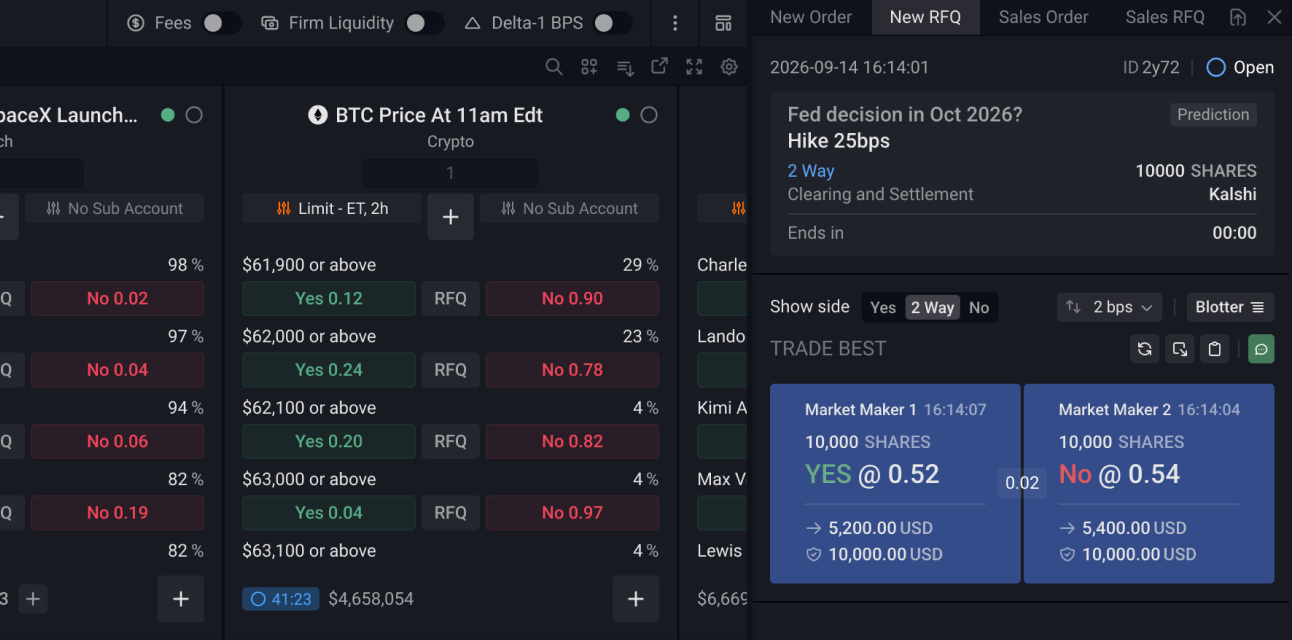
The Talos RFQ platform, the same system Talos ETF issuer clients use for create and redeem workflows, provides a block interface for negotiating size off-screen. Counterparties negotiate bilaterally on Talos and the agreed trade is printed as a block on the underlying exchange.
Broker distribution
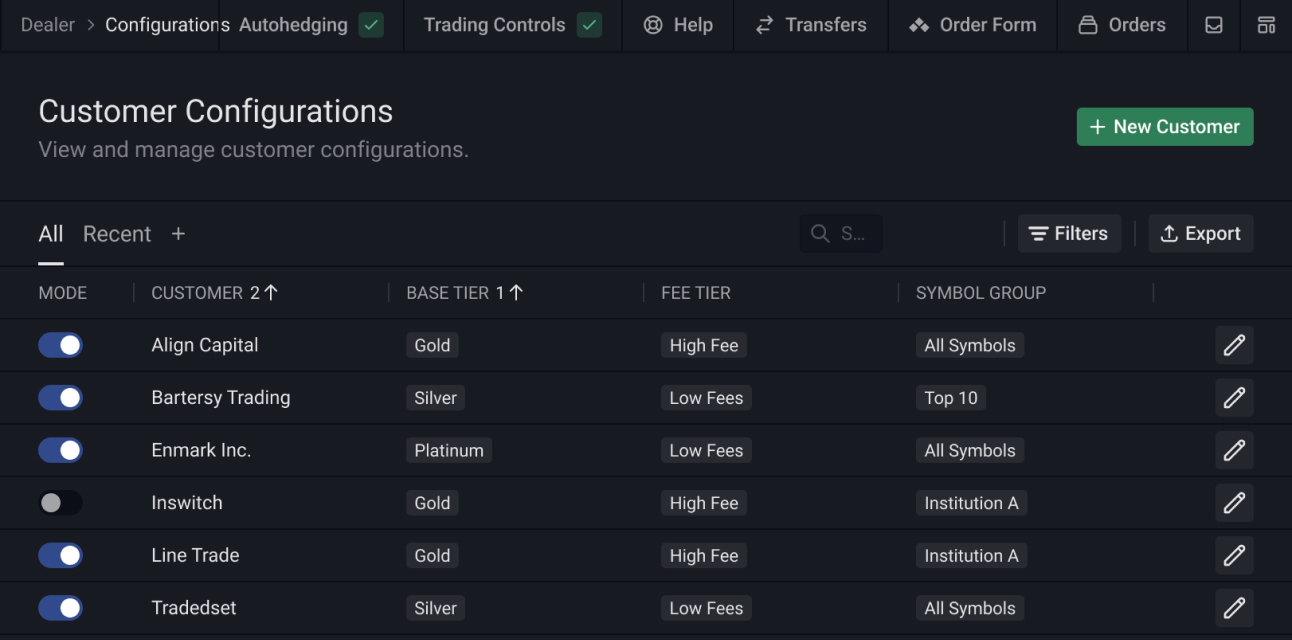
Retail and institutional brokers will be able to offer prediction markets to their own customers through one API, with connectivity, quoting, pricing controls and customer position management supported on the Talos dealer platform.
Liquidity Network
Market makers quoting event contracts reach institutional taker flow across funds, brokers and OTC desks through a single integration, rather than connecting bilaterally to each taker.
Market Data
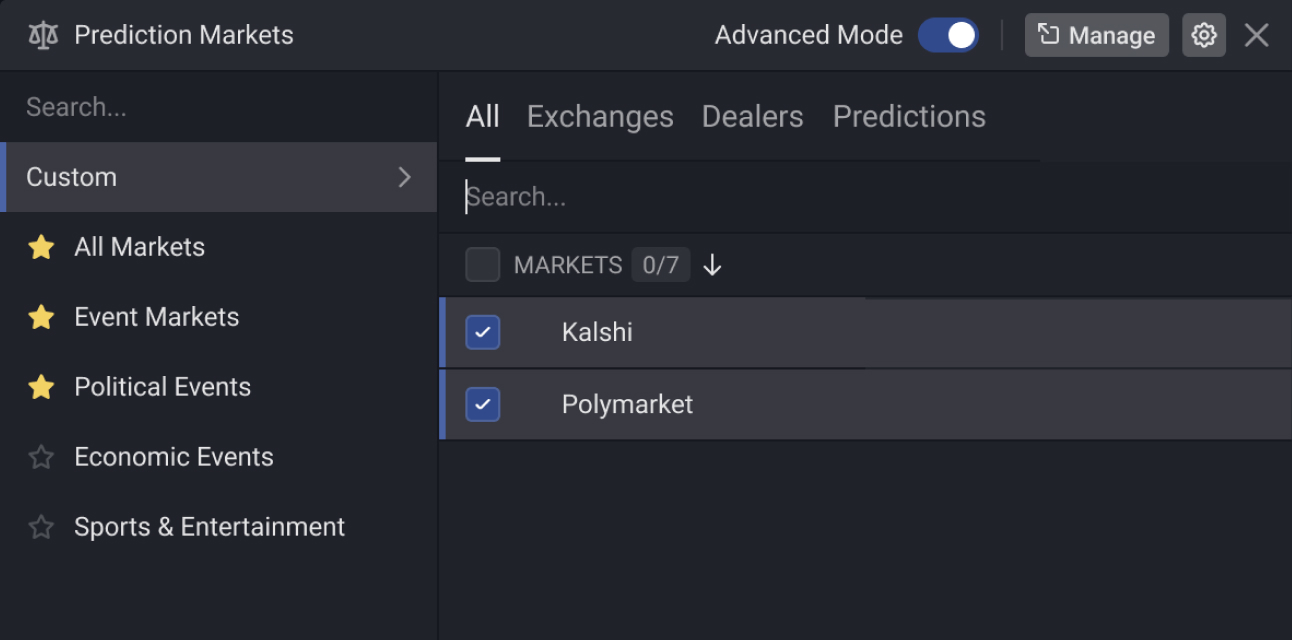
Venues model series structure, outcome representation and lifecycle states differently. Talos Data delivers trades, order books, candles, open interest and implied probabilities across Kalshi and Polymarket under one schema, through the same API clients already use for crypto market data.
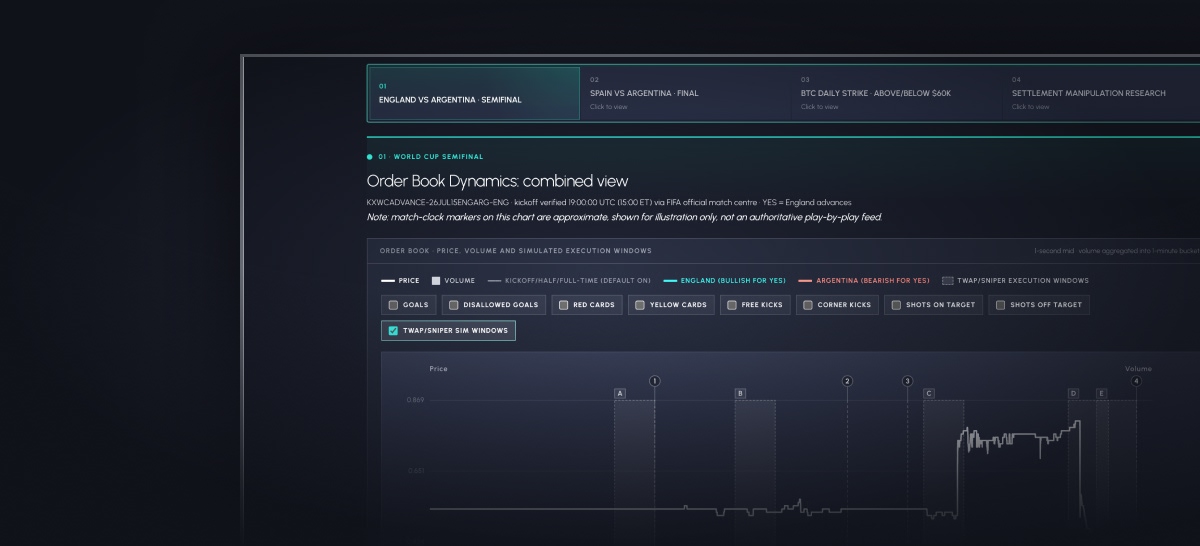
Execution Quality in Prediction Markets: Talos Quant Research
Talos Quantitative Execution Services simulated institutional-scale orders across three Kalshi markets to measure what trading against the visible book would have cost.
- Sniper outperformed an instant sweep in all three markets, with ~45% improvement in the BTC strike market simulated
- Sniper outperformed TWAP in all three markets, with the greatest slippage reduction observed in the thinnest market
Simulated results. Not indicative of future results.
Simulated
−4.08%
Semifinal · Sniper vs sweep
Simulated
−1.70%
Final · Sniper vs sweep
Simulated
−44.68%
BTC daily · Sniper vs sweep
A negative value is favorable: the algo statistically outperformed the benchmark, an instant sweep of the book.
Request a demo
Talk to the Talos team about the Prediction Markets workflow
Related insights

.jpg)
.jpg)

This communication is for informational purposes only and does not constitute an offer, solicitation, recommendation or investment advice regarding any digital asset, security, derivative, commodity, event contract, prediction market product or trading strategy. All images are for illustrative purposes only and do not represent actual data. Talos Global, Inc. and its affiliates ("Talos") make no representation as to the accuracy or completeness of this information, which is subject to change without notice, and accept no liability for its use. Event contracts referenced are financial instruments traded on regulated venues. They are not gambling, wagering or betting, and Talos does not offer, operate or facilitate gambling services. Reproduction or redistribution without Talos's prior written permission is prohibited.
© 2026 Talos Global, Inc.