


Key Takeaways
- Meme coin launchpads and privacy coins have captured more interest as investors continue to focus on token and protocol utility. The median meme coin return in MSCI’s taxonomy is down 27% year-to-date.
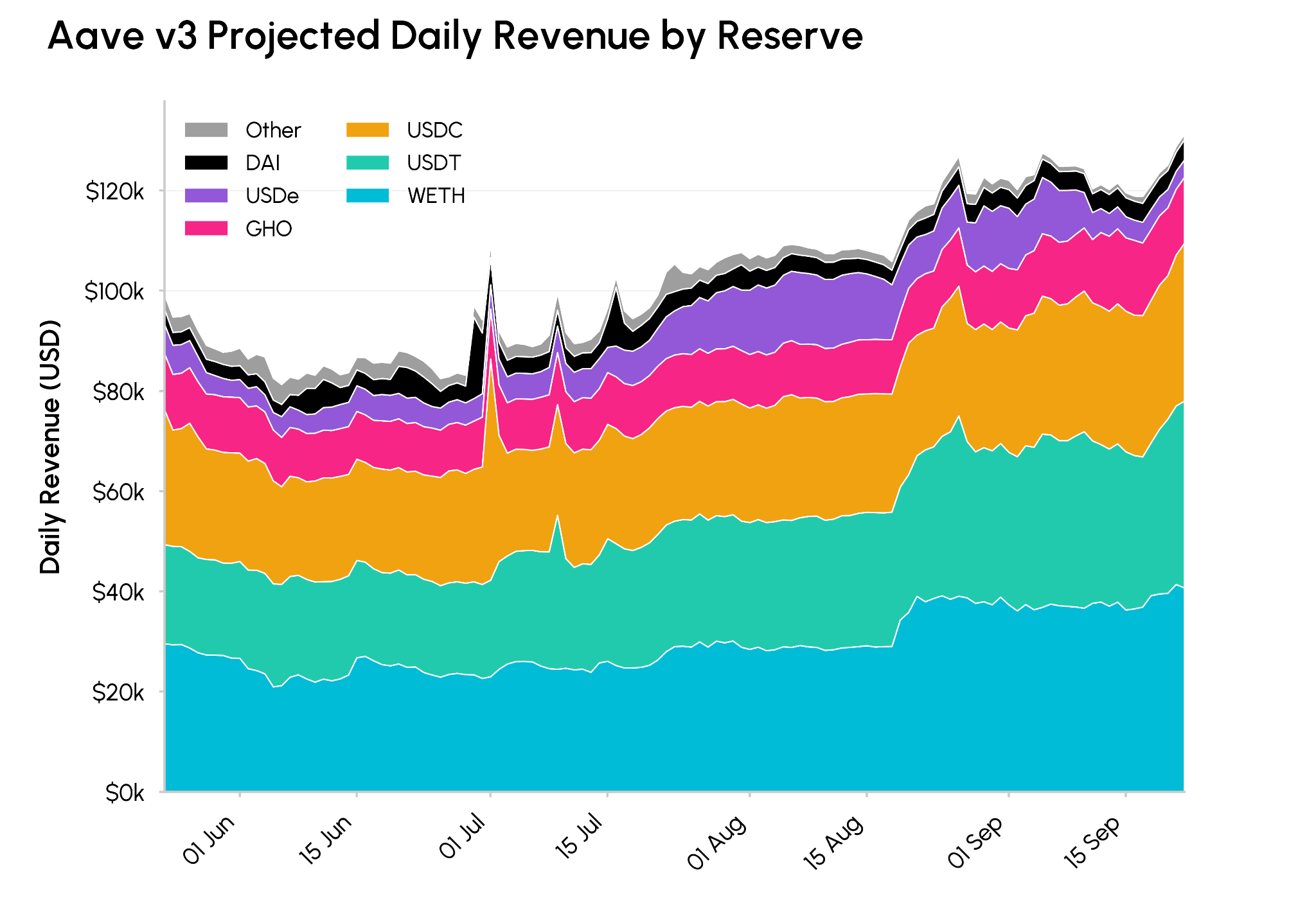
- Investors are rotating into protocols that generate revenue like Aave who is projected to generate $47M from Ethereum lending protocols. Monetizing services is an increasingly important measurement of protocol growth.
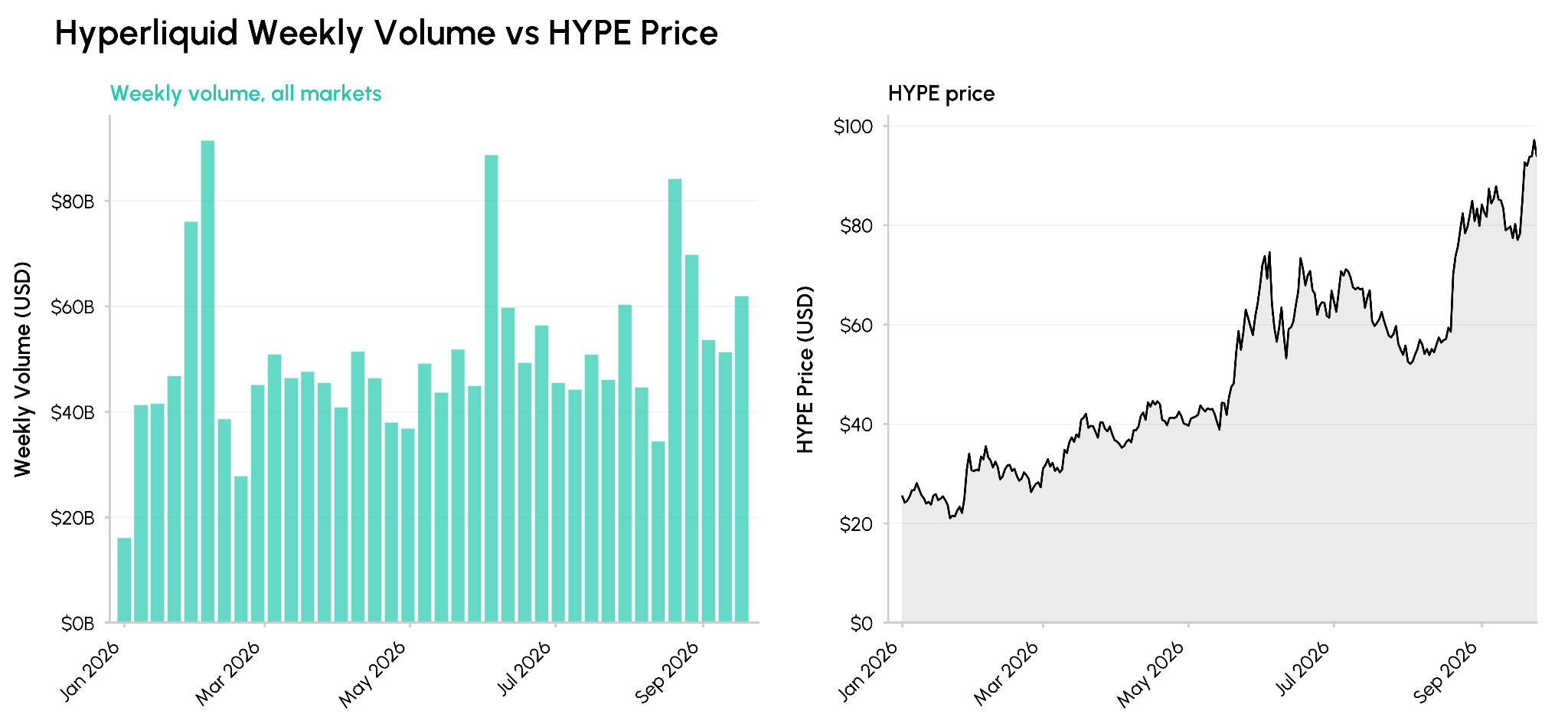
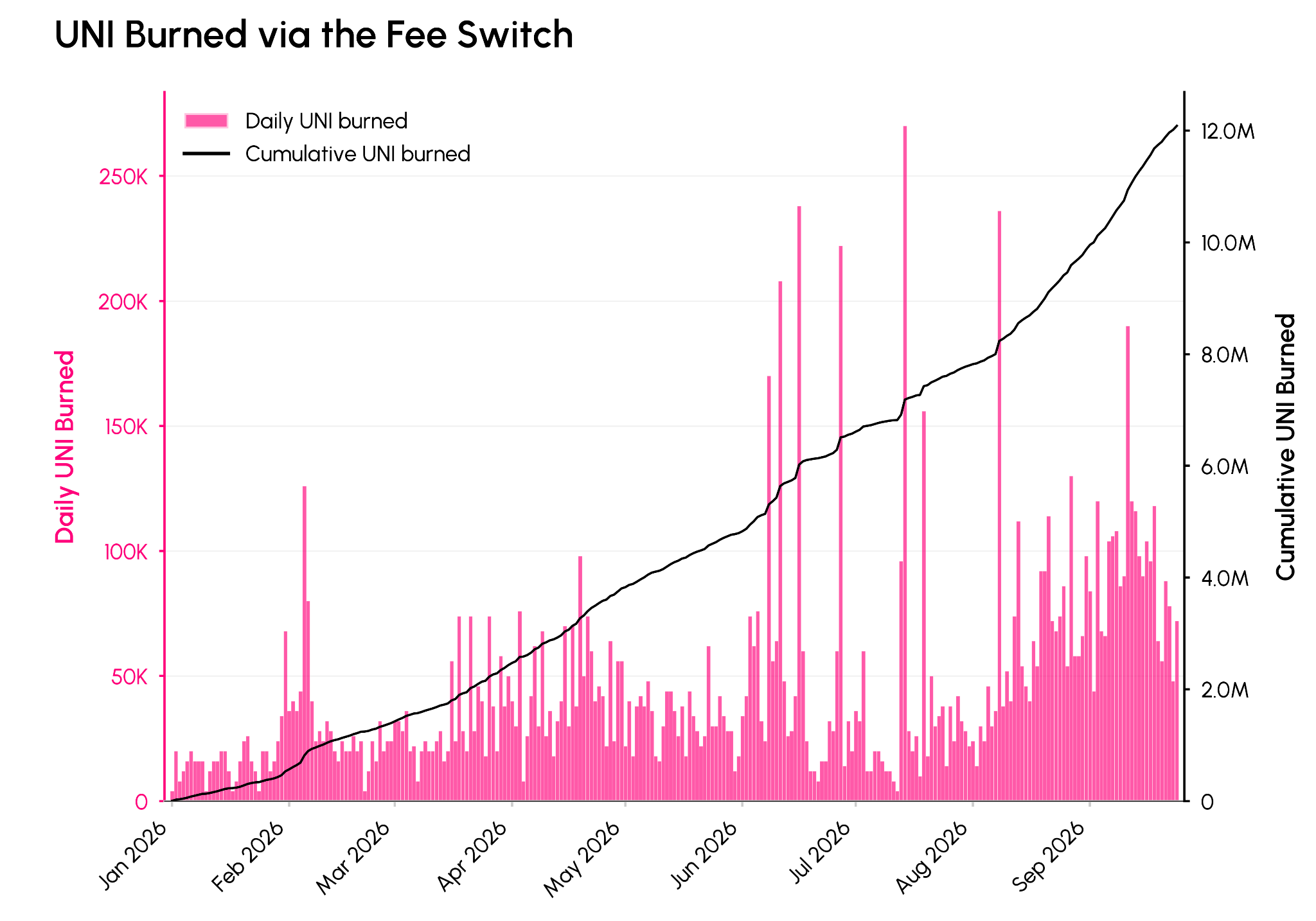
- Protocols including Hyperliquid and Uniswap are using revenue to buy back and reduce outstanding token supply. Since announcing a buyback program, Uniswap has burned over $12M of UNI tokens.
Introduction
BTC accounts for ~56% of the total crypto market cap. Crypto has historically been dominated by monitoring Bitcoin’s returns and reaction to macroeconomic conditions. While Bitcoin may be a lot of the crypto market, it is not the entire industry.
In previous bull markets, capital would typically flow initially to bluechip and large cap cryptos (BTC, ETH, SOL) before moving to alternative coins or altcoins. This is no longer the case. Today, altcoins are receiving just as much, if not more attention at times than large-cap crypto. Crypto’s various sectors and subsectors that make up altcoins provide ample opportunities for investors to gain alpha.
In the recent market rally, Interest in altcoins has been more concentrated in a few sectors and protocols during recent bullish sentiment. In this State of the Network, we examine some of the trends driving privacy and meme coin performance, the shift from meme coins to revenue-generating protocols, and highlight protocols which harness revenue to conduct token buybacks to return value to tokenholders.
Privacy Coins
The pseudonymous nature of the blockchain allows users to identify spending patterns, counterparties, and other information, limiting the amount of sensitive activity executed on the blockchain. One of the leading privacy-preserving solutions is the Zcash network. Zcash was forked from the Bitcoin codebase in 2016 and introduced opt-in privacy transaction and address features. Year-to-date, Zcash has achieved a 218% return.
Source: Talos CM Market Data Pro
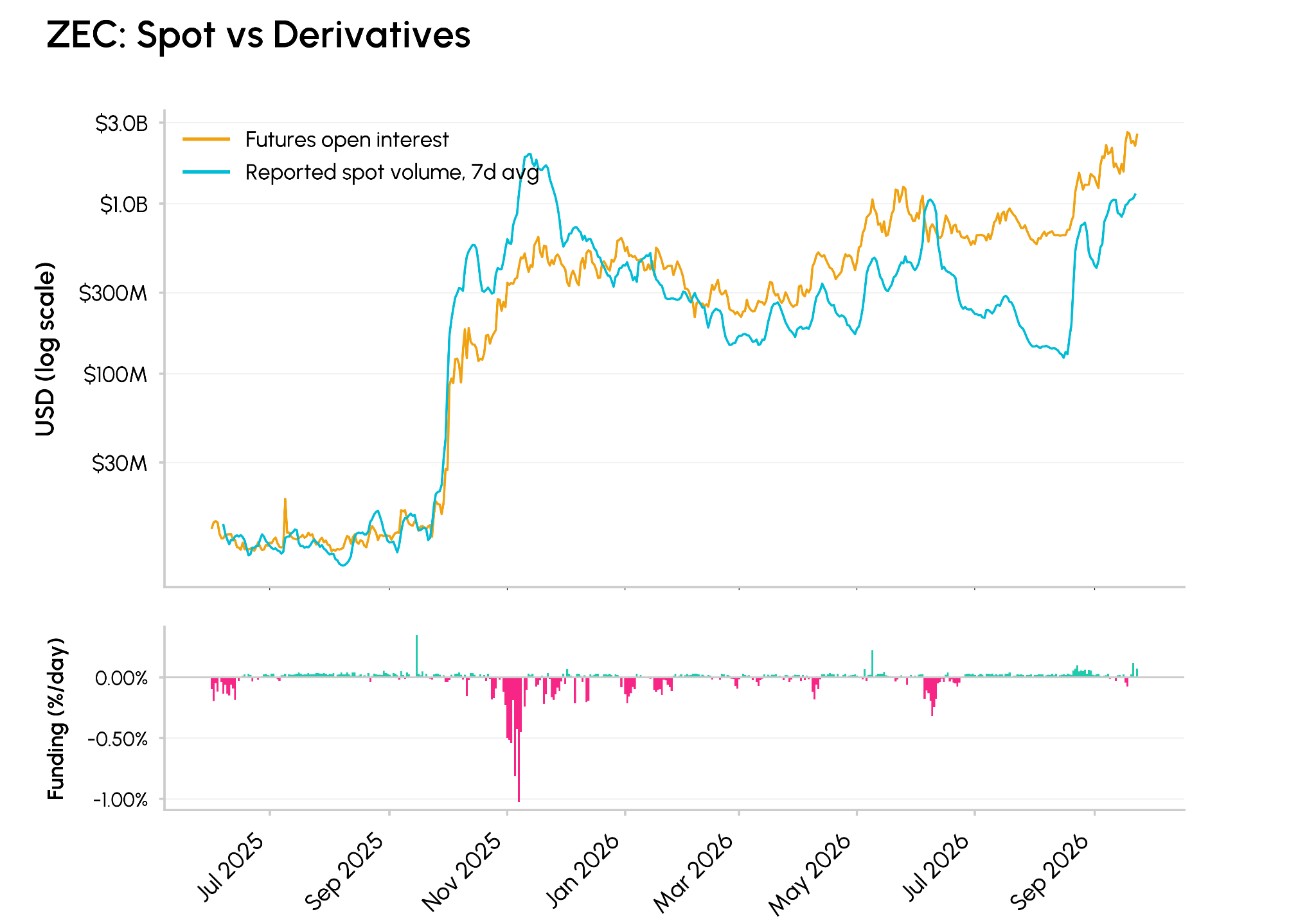
ZEC futures exploded in October 2025, with open interest surpassing $300M before 2026. Following a reversal when funding rates flipped negative, open interest has continued to climb and is now more than $2B.
Source: Talos CM Network Data Pro
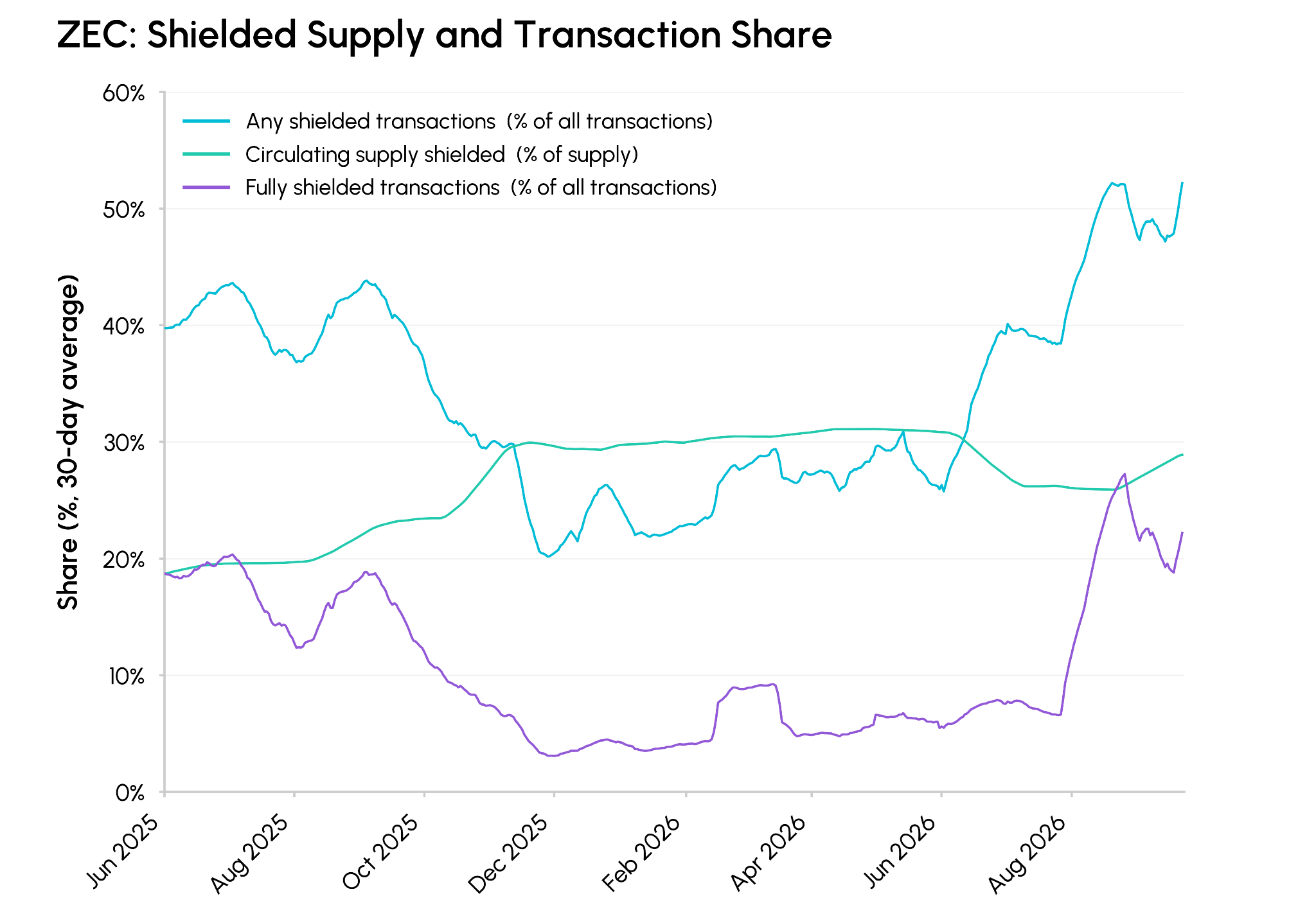
Zcash supports two key features for increased privacy: shielded pools and shielded transactions. Shielded pools offer custom cryptographic security and privacy properties. Shielded transactions use zero-knowledge proofs so that transaction contents like participants and amounts remain hidden.
Shielded-ZEC supply reached new highs in 2026 with just over 30% of ZEC supply held in shielded or private addresses. Any shielded transactions account for 52% of total transactions on Zcash, showing user adoption of privacy-preserving technology. The increased use broke out in August 2026 alongside returning interest in crypto markets.
Meme Coins
Meme coins have historically helped networks bootstrap liquidity and attract capital. Ecosystem-specific launchpads have gained steam. Users have primarily migrated to Pumpfun on Solana and Pons on Robinhood chain; the PUMP token is up 134% year-to-date.
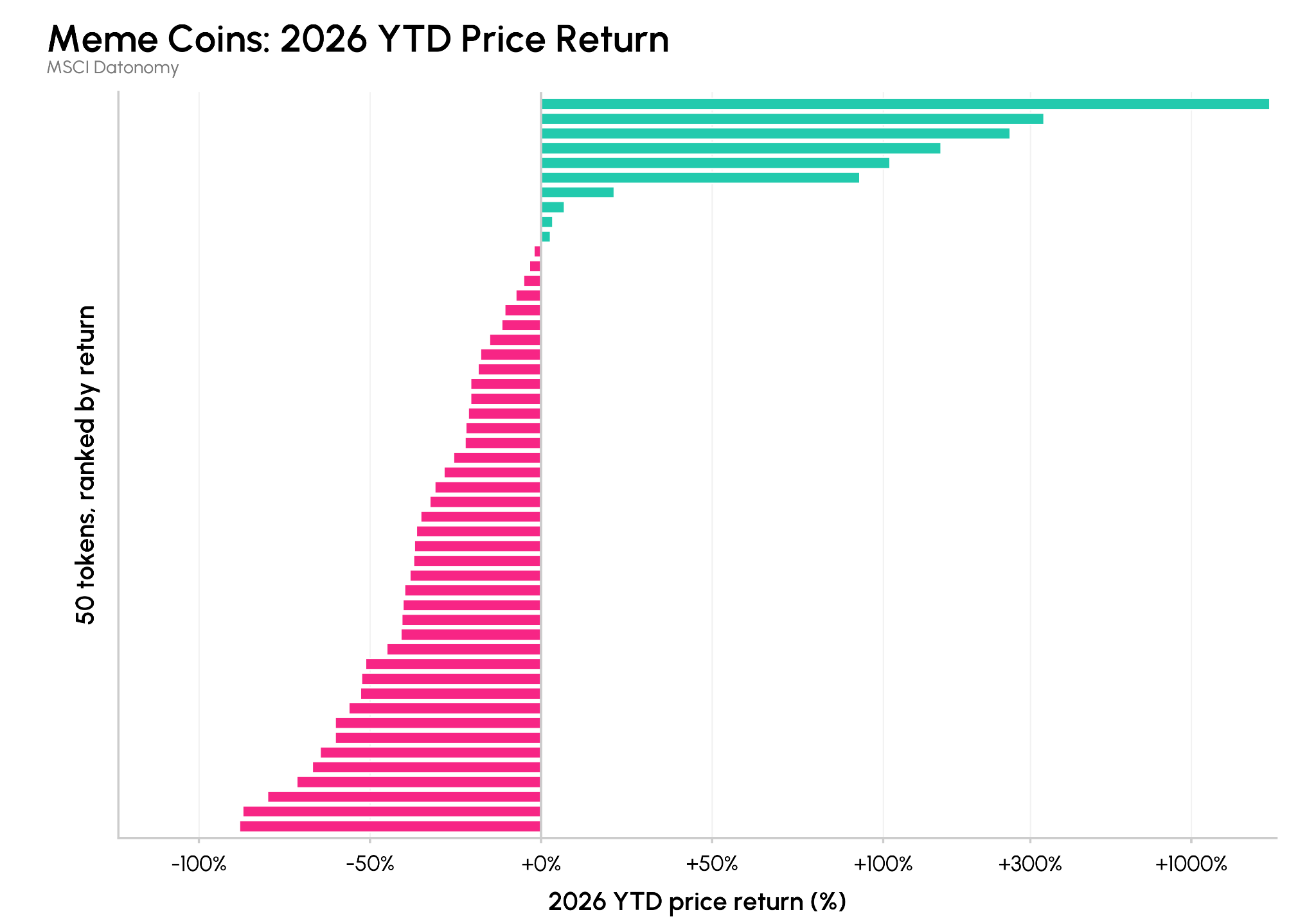
Not all meme coins are created equal: amongst meme coins, few tokens have had positive year-to-date returns. The median meme coin within the MSCI Datonomy subsector achieved a loss of 27%.
Meme coins that are successful are achieving new forms of distribution. Some meme coins have created pools of the respective token paired with a tokenized stock. Popularized on Robinhood chain, this pool pair is an attempt to pump both the meme coin and the tokenized stock price by manipulating the tokenized stock’s float.
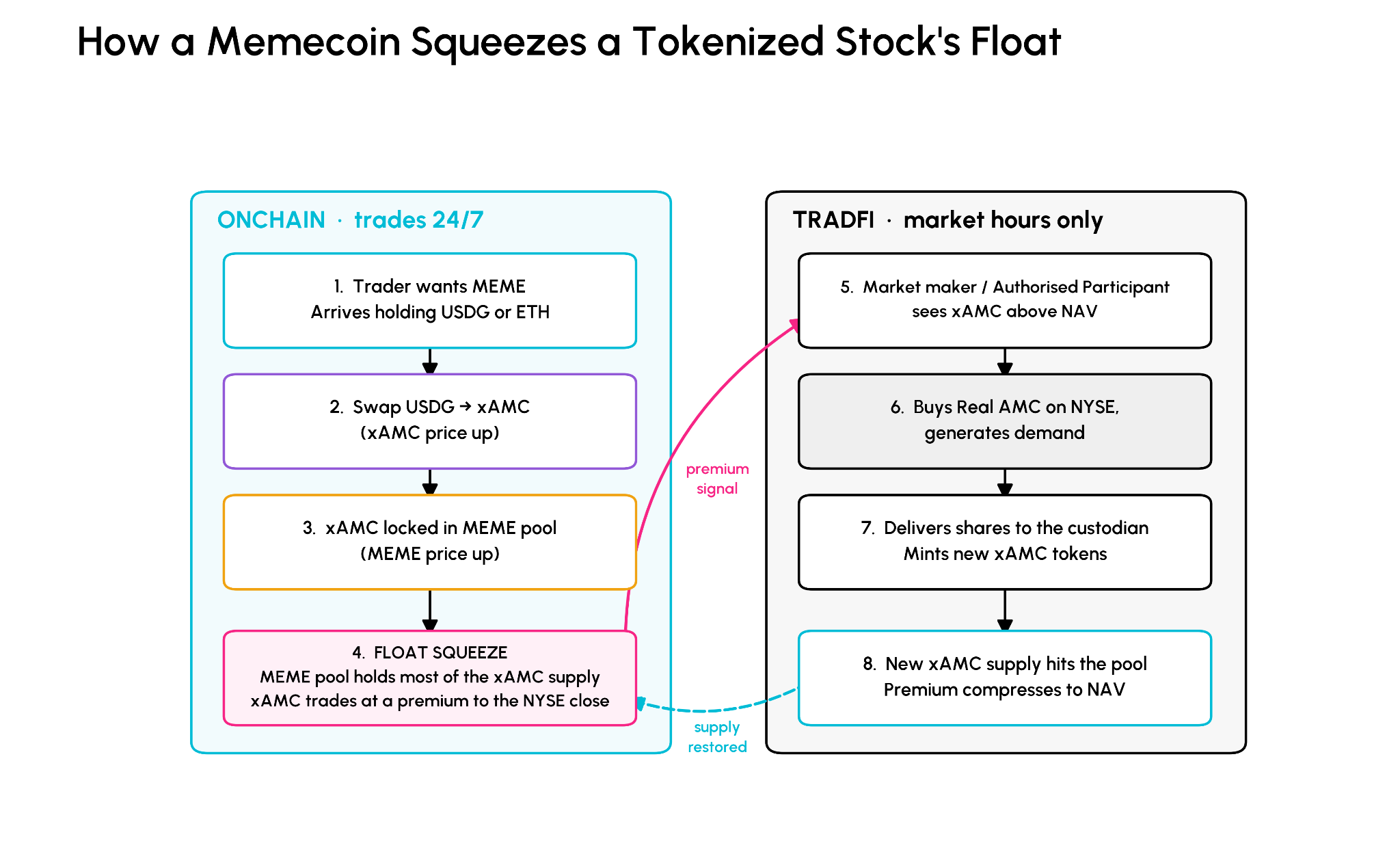
Example: Developers create “MEME/AMC Tokenized Stock (AMC)” Uniswap pool. Users purchase AMC and swap it in the pool to buy MEME. More AMC in the pool increases the price of MEME token due to less available to swap into. As investors rush to acquire MEME, this drives AMC Tokenized Stock price up due to the limited amount of AMC available. To satisfy demand for AMC, approved market makers must purchase AMC shares on traditional exchanges to tokenize and sell to buyers. This buy pressure intends to pump AMC stock by dislodging the price of the tokenized variant with the underlying shares.
Revenue-Generating Protocols
On the opposite side of the spectrum, investors are also allocating to protocols, like meme coin launchpads, who are successfully monetizing their services.
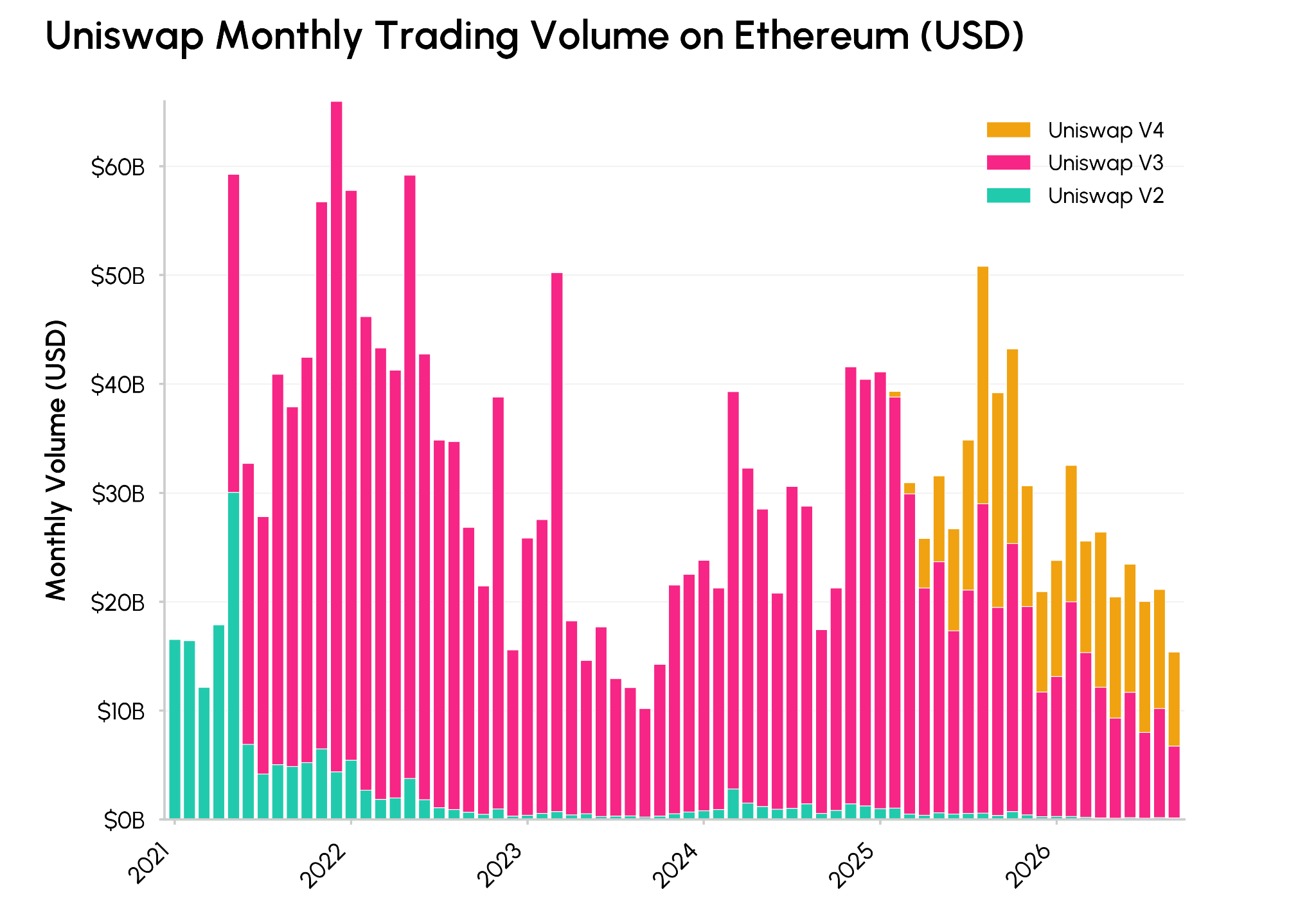
The Uniswap UNIfication Proposal enabled the Uniswap protocol to capture a portion of fees from trading volume across v2 and v3 pools. Turning on the fee-switch mechanism allows Uniswap to fund additional programs, incentives, and pursue initiatives growing the protocol. In August 2026, on Ethereum, v3 pools accounted for ~47% of Uniswap volume.
Source: Talos CM Market Data Pro
Lending protocols have also achieved sustainable runways. Each Aave lending market has a reserve factor which takes a percent of the interest fees earned from borrowers and directs it to the Aave treasury. Lending and borrowing stablecoins is popular due to price stability and deep liquidity. On Ethereum, five stablecoins on Aave account for ~68% of fee revenue. Annualized, Aave is projected to generate around $47M from Ethereum lending protocols.
Source: Talos CM Network Data Pro
Token Buybacks / Burns
A popular use of protocol revenue is buying back tokens from the open market and burning them or removing them from supply. More protocols are announcing token buybacks to return value to tokenholders.
Source: Talos CM Market Data Pro
Hyperliquid consistently uses its revenue to buyback and burn HYPE tokens. Services and products that generate revenue for Hyperliquid include:
- Trading Volumes - Trading volumes across HyperCore markets, HIP-3 HyperEVM markets, and HIP-4 outcome markets generate trading fees with a portion managed by Hyperliquid.
- HIP-1 and HIP-3 Auctions - HIP-1 and HIP-3 builders bid HYPE to win auctions. Winning the auction allows the HIP-1 or HIP-3 builder to deploy a spot or perpetual market respectively on HyperEVM. The HYPE tokens bid by the winning bidder are burnt.
- USDC as AQAv2 - USDC is an Aligned Quote Asset v2 (AQAv2). For every $1 of yield earned by treasuries and short-term assets backing USDC on Hyperliquid, Circle and Coinbase must share ~90% of the reserve yield with Hyperliquid.
- HyperEVM fees: Fees to interact with the HyperEVM network can be collected by Hyperliquid validators participating in network security.
Other revenue-generating protocols including Uniswap and Aave also buyback and burn tokens. On Ethereum, Uniswap has burned over $12M worth of UNI. Additional guidance released from the SEC supports functioning protocols buying back tokens while not being considered a security.
Source: Talos CM Network Data Pro
Outlook
The recent rally in altcoins is more concentrated and considered of higher quality than previous altcoin rallies. Meme coins continue to account for some of the rally but we see a shift into protocol tokens with exposure to dominant themes, and whose services earn revenue and are used to improve the protocol through reinvestment or token buybacks
Talos's State of the Network is an unbiased, weekly view of the crypto market informed by our own network (on-chain) and market data.
Subscribe
If you’d like to get State of the Network in your inbox, please subscribe below.
Latest insights and research



Request a demo
Find out how Talos can simplify the way you interact with the digital asset markets.